.png)
What to Do If Your Denture Breaks or Cracks: Quick Fixes, Repairs, and Prevention Tips

A cracked denture can turn a normal meal, conversation, or morning routine into a stressful moment fast. The good news is that broken dentures are common, and in many cases, they can be repaired safely by a dental professional.
The key is knowing what to do right away, what not to do, and when to stop wearing the denture until it has been checked. This guide walks through calm, practical steps so you can protect your mouth, avoid making the damage worse, and get back to eating and speaking comfortably.
This post is for general information only and is not a substitute for care from a dentist or denture professional.

What to do right away if your denture breaks
Start by taking the denture out of your mouth. Even a small crack can create a sharp edge, change the fit, or put pressure on your gums.
Once the denture is out, follow these steps:
Rinse it carefully
Use cool or lukewarm water. Avoid hot water, which can warp the denture.
Check for sharp edges
If part of the denture feels rough or jagged, do not keep wearing it. Sharp acrylic or metal can irritate your gums, cheeks, or tongue.
Save every piece
Place the denture and any loose teeth or fragments in a small container. Bring everything to your dental appointment.
Avoid chewing on it
A cracked denture can break further under biting pressure. Stick with soft foods if you need to eat before your appointment.
Call your dentist or denture provider
Even if the break looks minor, a professional should confirm whether it is safe to wear.
A patient once described hearing a “tiny pop” while eating toast. The denture looked mostly intact, so they wore it for another day. By the next morning, the crack had spread across the plate. Small breaks can grow quickly, especially if the denture no longer spreads pressure evenly.
Temporary fixes that can help for a short time
A temporary fix should only help you get through a short period until you can be seen. It should not replace a professional repair.
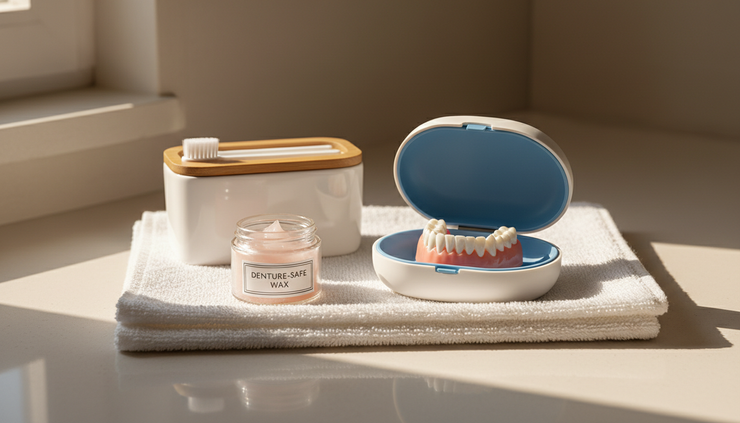
If the denture has a minor rough spot, orthodontic wax or denture-safe wax may help cover the edge. If a tooth has popped out but the base is not cracked, a denture repair kit from a pharmacy may help in some cases. Read the instructions carefully and use only products made for dentures.
Do not use household glue. Super glue, craft glue, epoxy, and other adhesives can contain chemicals that do not belong in your mouth. They can also damage the denture material, making a professional repair harder.
Also avoid:
Filing the denture yourself
Bending metal clasps
Boiling the denture
Using tape
Sleeping in a cracked denture
Wearing a denture that causes pain, sores, or bleeding
If the denture is broken in half, has a large crack, or no longer fits securely, leave it out. It is better to go without it briefly than to injure your mouth or make the damage worse.
When to seek professional help
Call a dentist, prosthodontist, or denture lab as soon as possible if your denture breaks or cracks. Seek help sooner if you notice pain, swelling, bleeding, mouth sores, or trouble eating.
Professional help is especially important when:
The denture has snapped into two or more pieces
A crack runs through the base
A tooth has broken off
A metal clasp is bent or loose
The denture feels different when you bite
It rocks, slips, or rubs after the damage
You repaired it once and it broke again
A broken denture often points to an underlying issue. The denture may no longer fit because your gums and jawbone have changed over time. It may also have worn down from years of chewing. Sometimes a dropped denture simply lands at the wrong angle and fractures.
For anyone looking up what to do if your denture breaks or cracks, the safest answer is simple. Stop using it if it hurts or feels unstable, protect the pieces, and schedule a repair appointment.
What to expect during denture repair
At the appointment, the dental team will check the break, your mouth, and the way the denture fits. They may ask how it broke, when it was made, and whether it has been repaired before.
Depending on the damage, repair may involve:
Reattaching a denture tooth
Fixing a crack in the acrylic base
Smoothing a rough or sharp area
Adjusting the bite
Relining the denture so it fits your gums better
Sending it to a dental lab for a stronger repair
Some minor repairs can be completed quickly. More complex damage may take longer, especially if the denture needs lab work. If the denture is old, badly worn, or repeatedly breaking, replacement may be the better long-term choice.
A common testimonial sounds like this: “I thought I had ruined it for good, but the dentist explained why it cracked and repaired it without making me feel embarrassed.” That matters. Denture damage happens. Dental teams see it often, and their goal is to help you function comfortably again.

How to help prevent future denture damage
Prevention starts with daily habits. Dentures are strong enough for normal use, but they can crack if dropped, forced into place, or allowed to dry out.
Use these habits to lower the risk:
Handle dentures over a towel or sink filled with water
This softens the landing if they slip from your hands.
Clean them gently every day
Use a denture brush and cleanser made for dentures. Regular toothpaste can be too abrasive.
Store them properly
Keep dentures moist when they are not in your mouth, unless your dentist gives different instructions.
Do not force the fit
If a denture feels tight, loose, or uneven, schedule an adjustment.
Keep regular dental visits
Your mouth changes over time. A small adjustment or reline can prevent stress fractures.
Avoid biting very hard foods
Hard candy, ice, and nutshells can put too much pressure on the denture.
Protect dentures from pets
Dogs especially may chew dentures if they are left on a nightstand or low table.
If you are in Waco or traveling anywhere in the United States, the same rule applies. A denture that fits well and is checked regularly is less likely to crack than one that rocks, pinches, or has been repaired at home.

Frequently asked questions
Can I still wear my denture if it has a small crack?
Only if it feels stable, has no sharp edges, and does not cause discomfort. Even then, call your dentist soon. A small crack can spread under chewing pressure.
Is it safe to repair dentures with super glue?
No. Household glues are not made for use in the mouth and can damage the denture. Use only denture-safe temporary products, and still arrange a professional repair.
How long does denture repair take?
Timing depends on the damage. A simple repair may be handled faster than a major crack or a denture that needs lab work. Your dental team can give you a better estimate after seeing it.
Why does my denture keep breaking?
Repeated breaks may mean the denture no longer fits well, the bite is uneven, or the material is worn. A reline, adjustment, or replacement may be needed.
Should I replace my denture instead of repairing it?
Repair may work well for minor damage. Replacement may be better if the denture is old, loose, badly worn, or has broken several times.
A calm next step
A broken denture is inconvenient, but it is usually a fixable problem. Remove it if it hurts, save every piece, avoid household repairs, and contact a dental professional as soon as you can.
Treat the break as a signal, not a disaster. With the right repair and a few careful habits, you can protect your comfort, your mouth, and the life of your denture.


