.png)
Modern Denture Myths Debunked Can You Eat Steak and Avoid Slipping

Dentures have carried a lot of old rumors for a long time. Many people still picture loose teeth clicking at dinner, a restricted diet, and something meant only for the very old. That image is outdated.
Modern dentures are lighter, more natural-looking, and better fitted than many people expect. They can support speech, chewing, facial shape, and day-to-day confidence when made and adjusted properly.
This article is informational only and does not replace care from a licensed dental professional. Fit, comfort, and chewing ability vary from person to person, so an exam is always the best starting point.

Myth one says dentures always slip
This is one of the most common fears, and it makes sense. Older dentures were often bulkier, less precise, and more likely to shift as the mouth changed over time. That does not mean slipping is unavoidable.
A well-made denture depends on several factors:
The shape of the gums and jaw
The accuracy of the impression or digital scan
The bite alignment
Muscle control from the cheeks, lips, and tongue
Follow-up adjustments after delivery
The mouth is not static. Gum tissue and bone shape can change, especially after teeth are removed. That is why a denture that fit well years ago can start to feel loose later. The problem may not be the denture itself. It may simply need an adjustment, relining, or replacement.
Dental clinicians often focus on fit, bite, and function. If one of those is off, slipping becomes more likely. A bite that hits unevenly can rock the denture during chewing. A border that is too long can get pushed out by cheek movement. A surface that is too short may not seal well.
A patient once described their first week with new dentures as “like learning to use a new pair of shoes, but for my mouth.” At first, they spoke carefully and avoided big bites. After a few adjustments and daily practice, they said they stopped thinking about them during meals.
That learning curve is normal. Muscles need time to adapt. Reading out loud, starting with softer foods, and chewing slowly on both sides can help build control.
A denture should not be judged by the first day alone. Comfort and stability often improve after fine-tuning and practice.

Myth two says you cannot eat steak
Steak is the food people name when they worry dentures will limit their life. It stands for more than dinner. It represents freedom, choice, and being able to enjoy familiar meals.
So, can someone with dentures eat steak? Often, yes, but technique matters.
A tough, oversized cut is hard for almost anyone to chew. With dentures, the smarter approach is to start with tender meat, cut it into smaller pieces, and chew evenly on both sides. This helps keep pressure balanced and reduces tipping.
Useful eating tips include:
Choose tender cuts when possible
Slice food into small, manageable pieces
Chew slowly on both sides of the mouth
Avoid tearing food with the front teeth
Give new dentures time before testing harder foods
The front teeth on dentures are not designed for ripping into dense foods the way natural teeth might. Biting hard into a crusty sandwich, corn on the cob, or a large piece of steak can break the seal and cause movement. Cutting food first can make a big difference.
One denture wearer shared that they avoided restaurants for months because they feared an embarrassing moment. Their turning point came at a family cookout. They chose a tender steak, cut it small, and ate slowly. “Nobody noticed anything,” they said. “That was the day I stopped planning my meals around fear.”
Not every food will feel easy right away. Sticky candies, very hard nuts, and chewy bread can be frustrating. Still, many people return to a wide range of foods after they adapt and get the fit checked. The goal is not just having teeth in place. The goal is comfortable function.

Myth three says dentures are only for elderly people
Dentures are often linked with aging, but tooth loss can happen at many stages of adulthood. Gum disease, injury, genetics, severe decay, medication side effects, and medical conditions can all play a role.
Younger adults may feel extra stigma because they assume dentures say something negative about them. They do not. Dentures are a dental solution, not a personal failure.
Modern dentures can be designed to match facial features, tooth shape, and smile style. Many are made with tooth shades and gum colors that look natural rather than flat or artificial. The goal is to support the face and smile in a way that fits the person.
Age also does not determine success. A motivated person in their 40s may adapt well. A person in their 70s may adapt well too. Health, mouth anatomy, expectations, and follow-up care matter more than a birthday.
This myth can be emotionally heavy. People may delay treatment because they fear being judged. That delay can affect nutrition, speech, and social confidence. Getting help sooner often makes the transition easier.
A hygienist once described seeing patients change after receiving well-fitted dentures. They smiled more in photos. They ordered food without scanning the menu for “safe” options first. They spoke at family gatherings instead of staying quiet. Those changes may sound small, but they affect daily life.

What modern dentures can do well
Dentures are not the same as natural teeth, and they are not perfect. They require cleaning, maintenance, and patience. They may need adjustments as the mouth changes. Some people need more time than others to feel comfortable.
Still, modern dentures offer real benefits:
They can restore the appearance of a full smile
They can help support cheeks and lips
They can improve speech after adaptation
They can make many foods easier to chew
They can boost confidence in social settings
Good results start with honest expectations. New dentures may feel large at first. Saliva may increase for a short time. Speech may sound different until the tongue adjusts. Sore spots should not be ignored, since small pressure points can become painful.
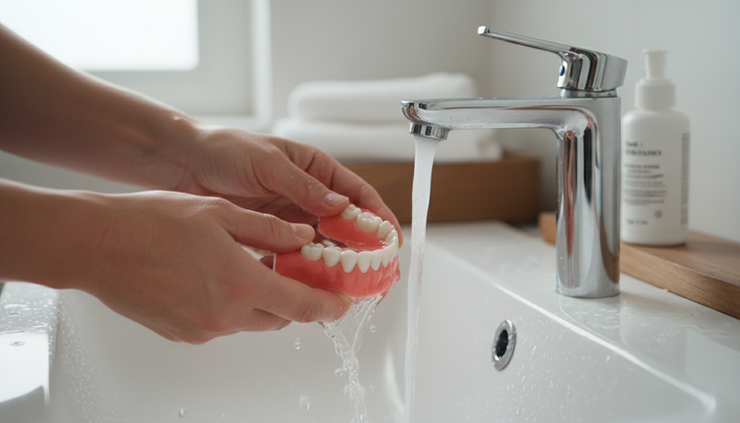
Daily care matters too. Dentures should be cleaned regularly with products made for them, handled carefully, and stored safely when not worn. The mouth also needs care, even when natural teeth are no longer present. Gums, tongue, and tissues should stay clean and checked.
Routine dental visits help catch fit issues early. A denture that rocks, rubs, or causes repeated sore spots needs attention. Using extra adhesive for months to compensate for a poor fit is usually a sign to schedule a visit.
The real takeaway about dentures
The biggest denture myths come from outdated experiences. They do not always slip. Steak is not automatically off the menu. They are not only for elderly people.
Modern dentures work best when they are well made, properly adjusted, and cared for every day. They also take practice. Chewing, speaking, and smiling may feel different at first, but many people adapt and regain comfort with time.
The most useful next step is simple. If dentures feel loose, painful, or limiting, do not assume that is normal. A dental professional can check the fit, the bite, and the health of the gums. Small changes can make a large difference in how dentures feel and function.


